Dyson V10 Review (2026): Still Worth It, or Time to Move On?
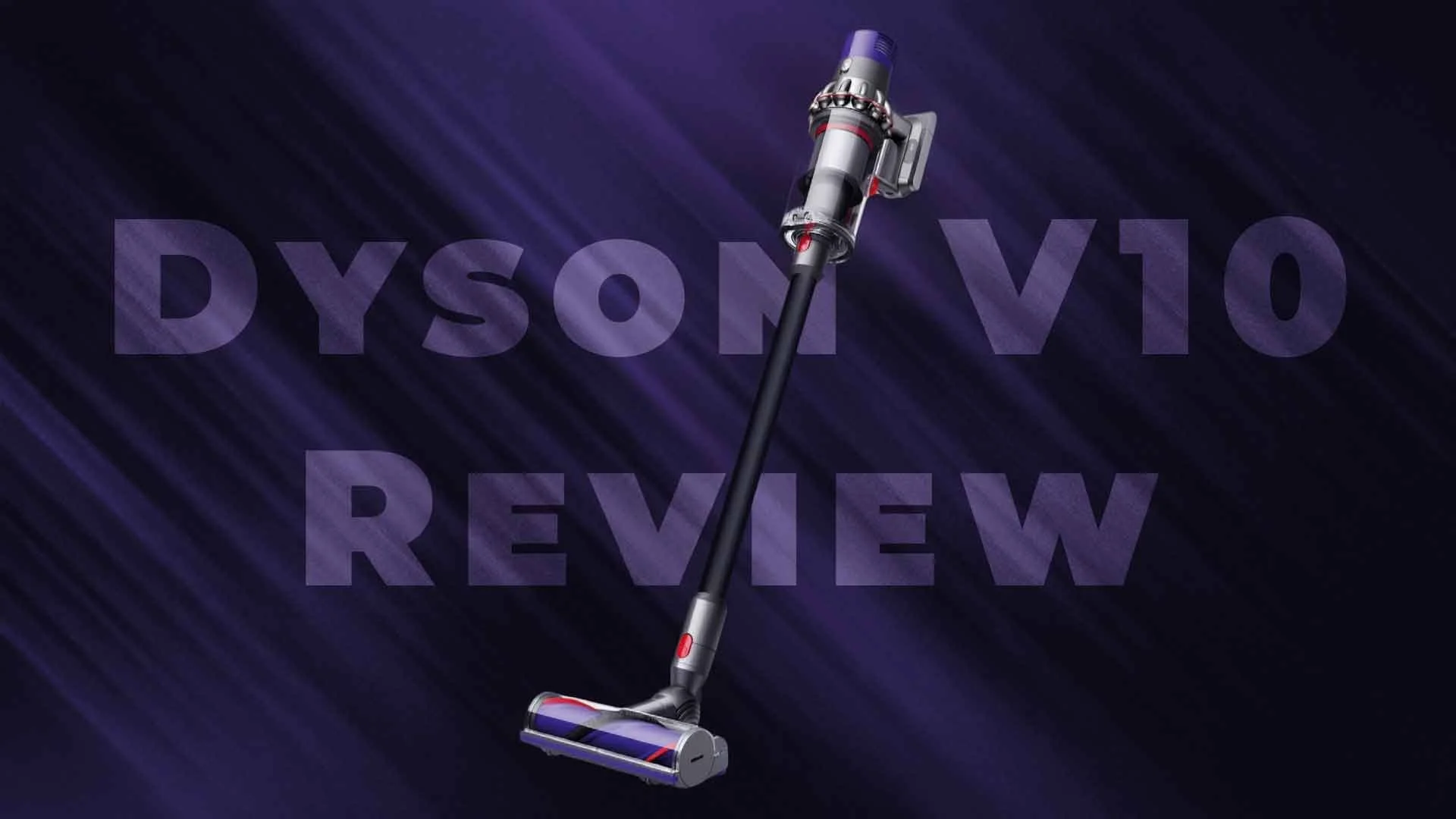
Cordless vacuums used to be a joke. Seriously. If you owned one ten years ago, it was the thing you grabbed for a quick crumb cleanup while your "real" vacuum sat in the closet. But battery tech got better, motors got smaller and faster, and cyclonic engineering kept improving. Somewhere along the way, the cordless stick vacuum stopped being a sidekick and became the main act (If you’re currently nursing an older generation model, you might want to check out my thoughts on whether the Dyson V8 is still a smart buy in 2026 before making the jump.)
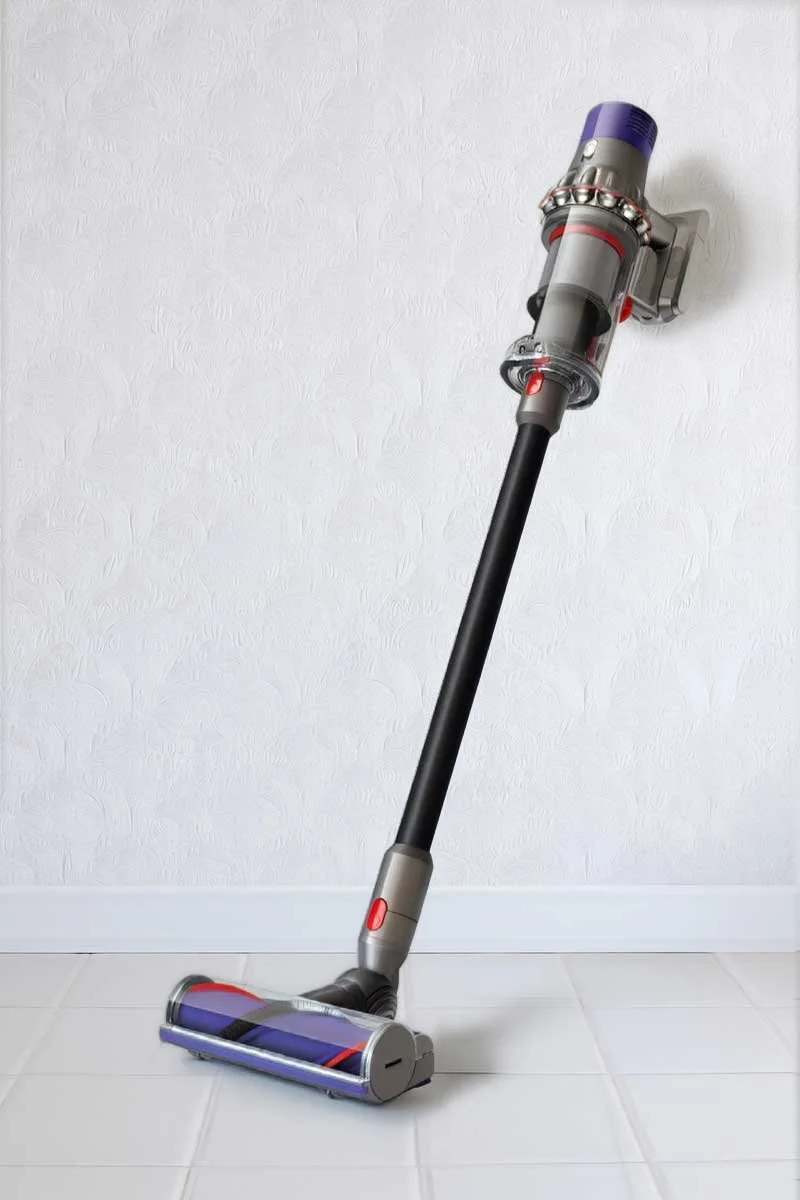
The Dyson Cyclone V10 sits right at that inflection point. When Dyson launched it back in 2018, they made a pretty bold declaration: corded vacuums were done. They actually stopped developing traditional uprights after this thing shipped. That's confidence.
Well, it's 2026 now. And the vacuum market has moved fast.
If you've browsed the vacuum aisle recently – or, more realistically, scrolled through an endless Amazon listing page – you know how wild things have gotten. Green lasers that illuminate dust you can't see with the naked eye. Piezo sensors that listen to debris hitting the intake and auto-adjust suction in real time. Self-emptying dock stations that basically turn your stick vac into a semi-autonomous cleaning robot. Flagship models like the Dyson Gen5 Detect and the brand-new V16 Piston Animal push past 300 Air Watts, sport full LCD screens, and even mop your floors (kinda).
The V10 has none of that. No display. No auto-adjusting power modes. No laser dust detection. It's an analog machine in an increasingly digital category.
And yet – it's everywhere. Refurbished units, budget retail channels, secondary market listings. It keeps showing up. Which raises a question worth actually answering: Does the Dyson V10 still make sense as a purchase in 2026, or has it been left behind?
That's what I set out to figure out. Not with spec sheets alone, but by actually living with one — running it across hardwood, carpet, tiles, and the kind of mixed-surface chaos that comes with real life.
Technical Specifications
Before I get into how the V10 feels in daily use, let's talk about what's actually under the hood. Because the engineering here was genuinely forward-thinking for its time – and some of it holds up better than you'd expect.
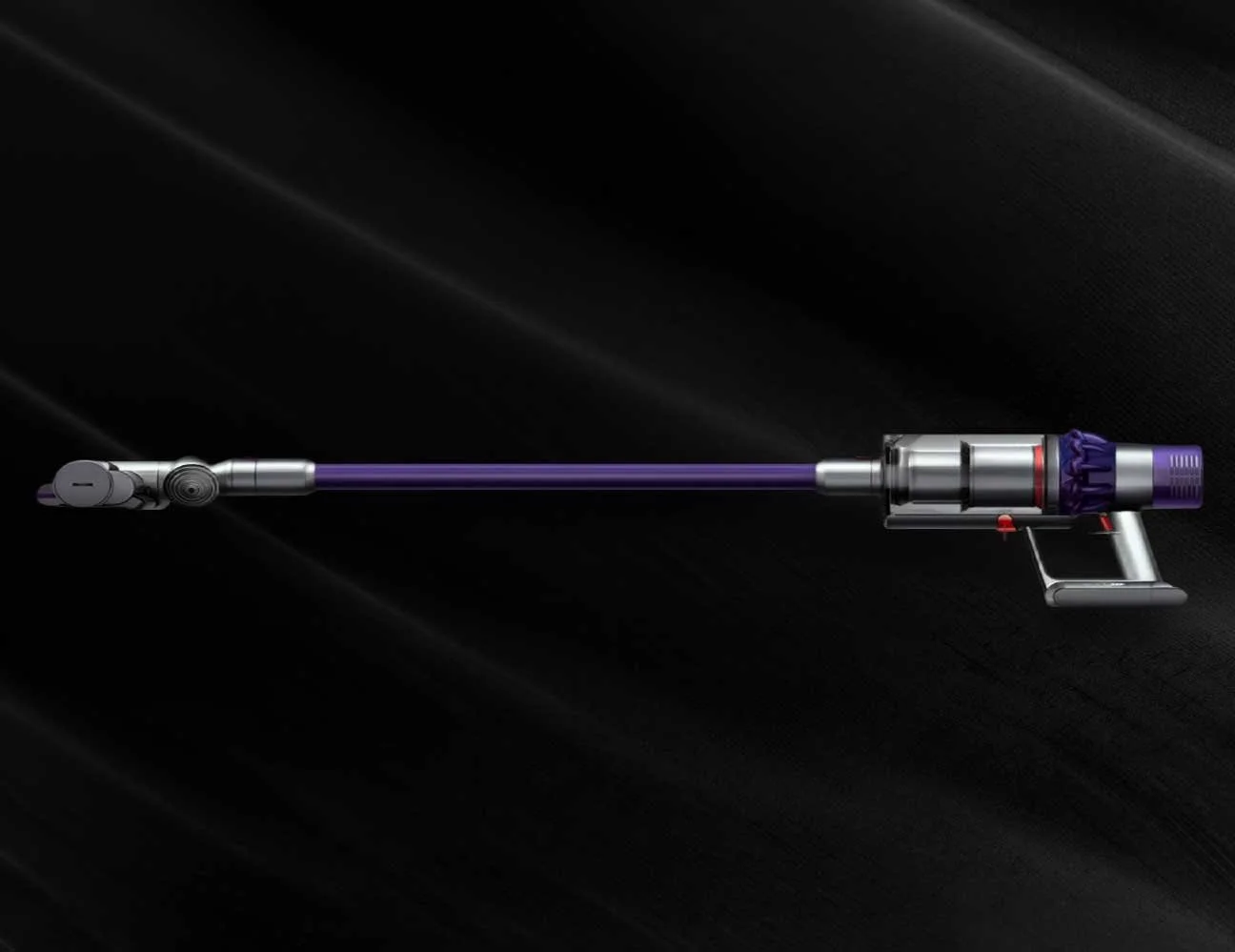
The big design shift from the older V8 was the move to alinear airflow path. The V8 had a perpendicular dust bin, which forced air through a sharp right-angle turn. Not ideal. The V10 aligned the motor, the 14-cyclone array, and the bin along a single axis. Straighter airflow, less turbulence, better suction efficiency. It's the same fundamental layout Dyson still uses in their current flagships — which tells you something about how right they got it the first time.
Here are the specs:
| Specification | Dyson V10 |
|---|---|
| Max Suction | 150 Air Watts (Boost Mode) |
| Motor Speed | Up to 125,000 RPM |
| Cyclone Array | 14 concentric cyclones |
| Dust Bin Capacity | 0.76 L (0.20 gal) |
| Filtration | Whole-machine HEPA (F1977) |
| Max Runtime | Up to 60 min (Eco, non-motorized tool) |
| Charge Time | 3.5 hours |
| Weight (assembled) | 5.90 lbs / 2.67 kg |
| Weight (handheld) | 3.65 lbs / 1.66 kg |
| Noise | 87 dBA (handheld, max) |
| Dimensions | 49.8 x 9.8 x 10.3 in |
One number that jumped out to me immediately: 5.90 pounds fully assembled. That's light. Like, noticeably light. The V10's center of gravity sits right near the trigger grip, which means reaching up to get cobwebs off the ceiling or dust along crown molding doesn't murder your wrist. Compare that to something like the Gen5 Outsize at nearly 8.6 pounds, and the difference is immediately obvious.
150 Air Watts in 2026 – Enough or Not?
Air Watts measure effective suction – it's essentially the relationship between airflow volume and vacuum pressure. The V10 peaks at 150 AW in Boost mode. In 2018, that was a landmark number for a cordless machine. In 2026? It's mid-tier. The V16 Piston Animal hits 315 AW. The popular V15 Detect does 240 AW. Even the ultralight V12 Detect Slim matches the V10 at 150 AW (though with considerably newer tech surrounding it).
On paper, it looks like the V10 is outclassed. More than doubled by the current flagship. That's a big gap.
In practice? It's a different story.
I ran the V10 across my apartment's mix of hardwood floors and tiles in the living area and medium-pile carpet in the bedroom, and 150 AW handles surface debris, hair, dust, and fine particles without breaking a sweat on hard floors and low-to-medium pile carpet. The V10 leans heavily on mechanical agitation from its cleaner heads – the Torque Drive for carpet and the Soft Roller (Fluffy) head for hard floors – to compensate for the raw suction gap. And honestly, it compensates well. You're not getting the deep-carpet extraction power of a 300+ AW machine, but for everyday messes? Crumbs from the kitchen counter finding their way to the floor, dust settling on hardwood, the kind of stuff that accumulates between deep cleans? Totally adequate.
The 14-cyclone array also deserves credit here. Those cyclones generate enough centrifugal force to fling fine particles into the bin effectively, which means suction doesn't fade as the bin fills up. That's a classic Dyson engineering advantage, and it still holds up against modern competitors. No clogging-induced power loss halfway through a session – something that cheaper alternatives still struggle with.
Performance and Usability
Lab numbers are one thing. Your actual house is another.
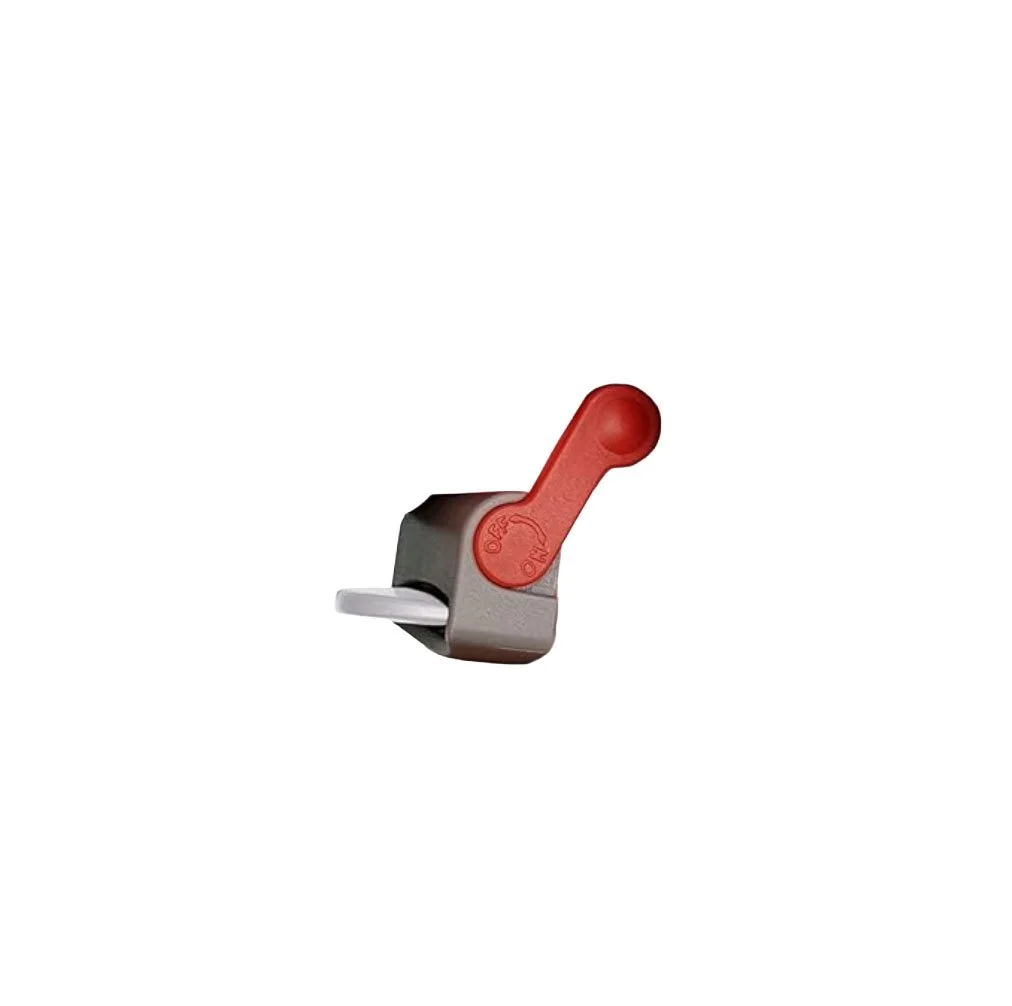
The V10 uses a mechanical trigger — you squeeze the handle, it runs; you let go, it stops. Dyson's logic here was battery conservation, and it works for that purpose. But after extended cleaning sessions, your hand knows about it. If you've got any kind of grip fatigue, arthritis, or joint sensitivity, this becomes a genuine issue. I noticed it most when switching between rooms – that constant squeeze-release-squeeze cycle gets old. Dyson clearly agreed, because they moved to a single-button continuous power toggle starting with the V12 and Gen5 lines. It's one of those small design choices that feels fine for five minutes and increasingly annoying at fifteen.
Luckily, it is not a dealbreaker as there actually is a cheap solution to this:
Hard Floors & Tiles
Pair the V10 with the Soft Roller head (the "Fluffy" head, as Dyson fans call it) and put it on sealed hardwood, luxury vinyl plank, or tile, and this thing performs. Even now, in 2026, it's genuinely impressive on hard surfaces.
The roller's plush, velvet-like texture solves a problem that anyone with a traditional vacuum knows intimately: snowplowing. That maddening thing where bristle brushes just shove cereal bits, cat litter, or crumbs forward instead of actually picking them up. The Soft Roller doesn't do that (at least rarely). It wraps around debris and pulls it into the suction path. The carbon fiber filaments woven into the roller also handle static – they release fine, flour-like dust that bonds to hard floors. I tested this on my apartment's white tiles after a week without vacuuming (please don't judge me), and the floor genuinely felt polished afterward. No residual grit under bare feet. That's the test that matters to me.
Carpet
On carpet, the Torque Drive head takes over with stiff nylon bristles that dig into fibers and pull up embedded dirt and pet dander. It does a visibly solid job – you can see the difference in a single pass on medium-pile carpet.
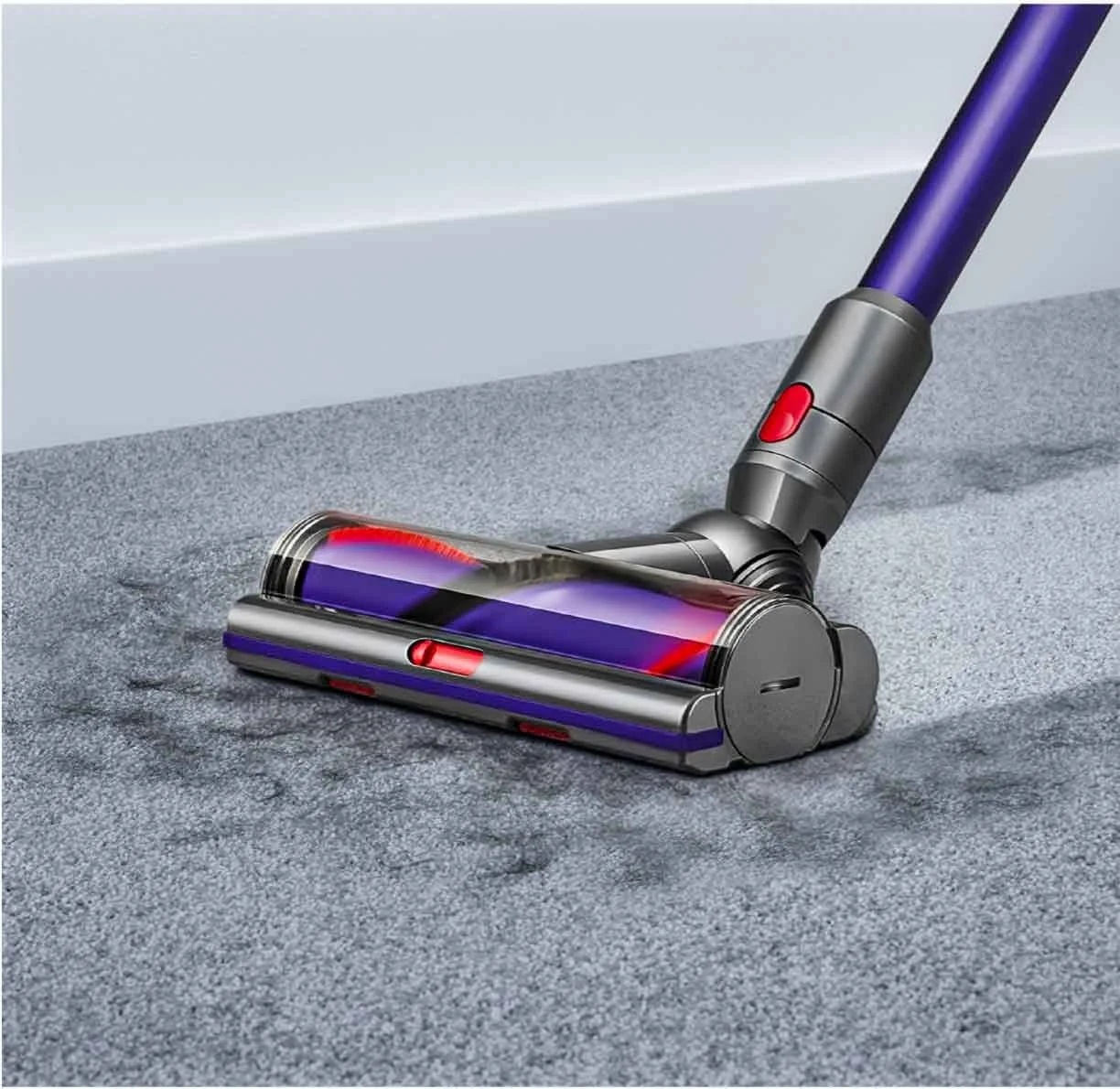
But here's where the V10's age kinda shows: hair tangling.
Modern cleaner heads have largely solved this problem. The V16 Piston's All Floor Cones Sense head, for instance, uses dual conical brush bars that physically migrate tangled hair off the roller and into the bin. Dyson markets that head as handling hair up to 25 inches without wrapping. With the V10? You're on maintenance duty. Periodically flipping the head over, popping off the end cap with a coin, and manually unwinding hair from the bristle bar. It's tedious. It's not exactly hygienic. And in 2026, where active detangling is essentially a baseline feature on any vacuum marketed as "premium," the V10 feels conspicuously behind.
If you have very long hair – or live with someone who does, or have pets that shed – this is probably the single biggest daily-use frustration you'll encounter with this machine.
Don’t get me wrong, it’s still very manageable but annoying from time to time.
Noise
The V10 hits 87 dBA in Boost mode. That's loud. The 125,000 RPM motor and the air velocity through the cyclone array produce a high-pitched whine that is, to put it diplomatically, not pleasant. As someone who's fairly attuned to audio quality from years of recording piano for my channel, the frequency profile of the V10 on max is genuinely grating. It's the kind of sound that makes you want to finish quickly.
For context, the V12 Detect Slim sits around 75 dBA, and even the far more powerful Gen5 Detect caps at 85 dBA. If you live in a smaller apartment, share walls with neighbors, or work from home – which, let's be honest, a lot of us still do – the V10 on Boost mode will absolutely interrupt a call.
That being said, normally the majority of the time you will find yourself using the regular mode, which is far more pleasant when it comes to noise levels.
Reliability and Long-Term Maintenance
This is the section where the V10's age stops being a charming vintage quality and starts being a genuine ownership headache.
The cleaning output? Generally good, as I've covered. The labor required to keep it cleaning well? That's where things get polarizing. Spend any time on Reddit threads and you'll see the phrase "maintenance hell" come up with uncomfortable regularity.
The "Fake Clog" Problem
The V10 has an internal pressure sensor designed to protect the motor from overheating if something catastrophic blocks the airflow – a sock, a large piece of debris, that kind of thing. When the sensor detects a pressure drop, it pulses the motor as a warning and then shuts the vacuum down.
In theory, smart engineering. In practice? The sensor can be wildly oversensitive after some time.
Fine dust – drywall dust, packed pet dander, fine ash – frequently bypasses the cyclone array and accumulates inside the stainless steel mesh shroud, the bin inlet flap, or deep within the cyclone cones themselves. This micro-buildup incrementally restricts airflow just enough to trip the sensor. The vacuum thinks it's clogged. It isn't. But it won't run.
And fixing it isn't just a matter of emptying the bin and carrying on. Owners, me included, end up dismantling the cyclone assembly, scrubbing inner rubber gaskets with a toothbrush (yes, really), and sometimes resorting to compressed air or a shop vac to blast out impacted dust from components that Dyson says you shouldn't wash. There are dedicated 20-minute YouTube tutorials walking people through the full teardown process. For a vacuum.
Think about that from a consumer psychology standpoint – and this is where my background in behavioral economics kicks in. You buy a premium appliance specifically to simplify a chore. When the maintenance ritual to keep that appliance functional becomes its own chore, you've created a frustration loop that erodes brand trust fast.
That being said, usually the Dyson V10 works flawlessly. And this issue can happen to other vacuums on our upcoming list as well – just keep that in mind.
Filter Maintenance
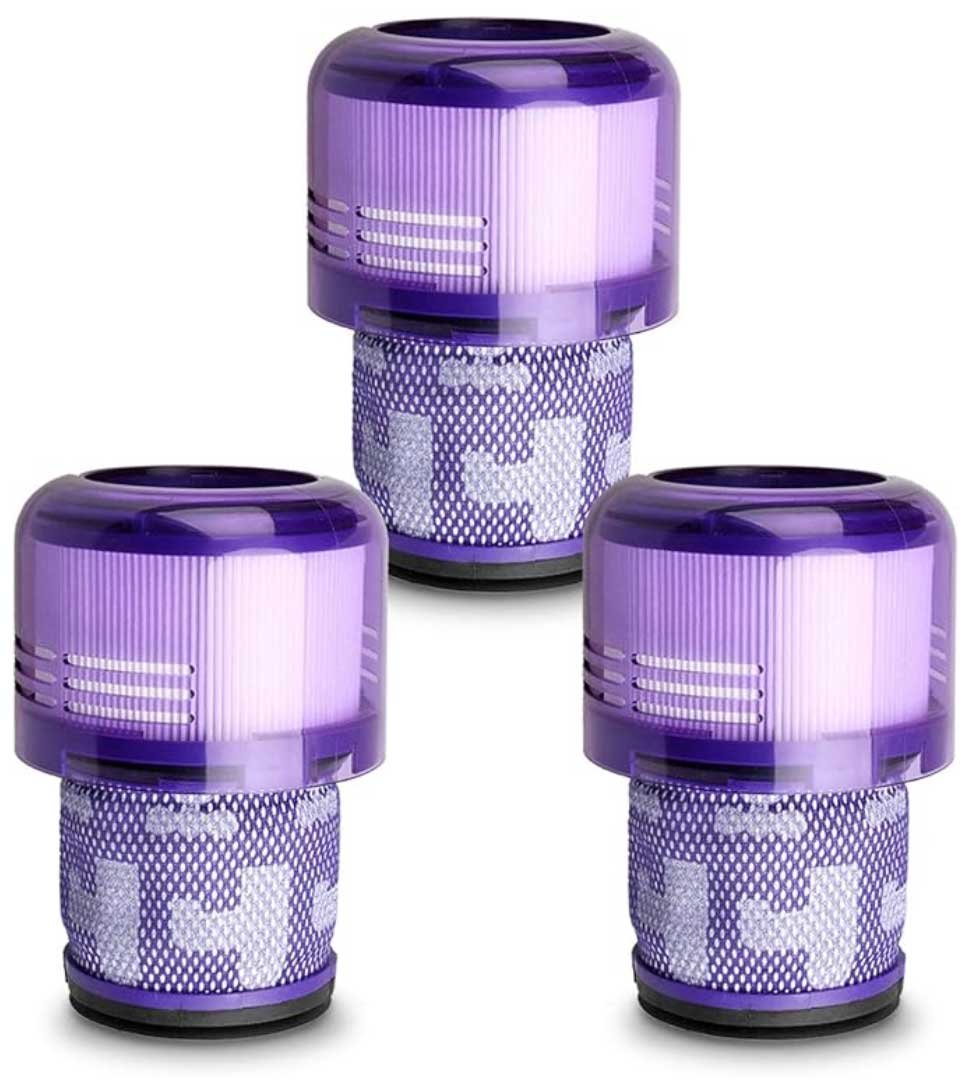
The V10uses a single, whole-machine HEPA filter at the rear of the motor housing, rated to capture 99.97 % of particles down to 0.3 microns. Dyson recommends washing it once a month.
Simple enough in principle. The execution is less forgiving.
The filter is a thick, porous fabric component that must be completely drybefore you reinstall it. Dyson specifies a minimum of 24 hours of air drying. If you jump the gun and put a slightly damp filter back in, the high-velocity airflow draws moisture straight into the motor electronics. That's not just a performance issue – it can cause electrical failure and voids your warranty. There's no warning indicator. No safety interlock. Just a wet filter and an expensive mistake waiting to happen.
Over time, there's a deeper problem. Repeated wash cycles physically degrade the filter. Microscopic silica particles permanently occlude the pores, and eventually no amount of washing restores proper airflow. The filter looks clean. It isn't clean – at least not in a way that matters for airflow. And once baseline airflow drops enough, you're right back to the pressure sensor tripping "fake clogs" on a machine with an empty bin and an ostensibly clean filter.
The solution is straightforward: buy replacement filters regularly. The frustration is that Dyson's own supply chain doesn't always cooperate. Multiple owners report backorders lasting a month or more through official channels for what is, fundamentally, a basic consumable part. When you can't get a filter for your vacuum for weeks, "premium brand experience" starts to feel like a stretch.
Battery Life
Dyson's official number is 60 minutes of runtime. That's in Eco mode, with a non-motorized attachment. Basically, the gentlest possible use case. The moment you snap on the Torque Drive head and hit carpet, you're looking at roughly 35 minutes on the standard setting. Kick it up to Boost mode and you've got five to seven minutes. That's it.
For my apartment, the standard setting gets the job done in a single session – tiles in the living area, carpet in the bedroom, a quick pass through the hallway. But if you're in a larger home, especially anything multi-story, that runtime math gets tight quickly. And it only gets tighter over time.
Why Batteries Die (and When to Expect It)
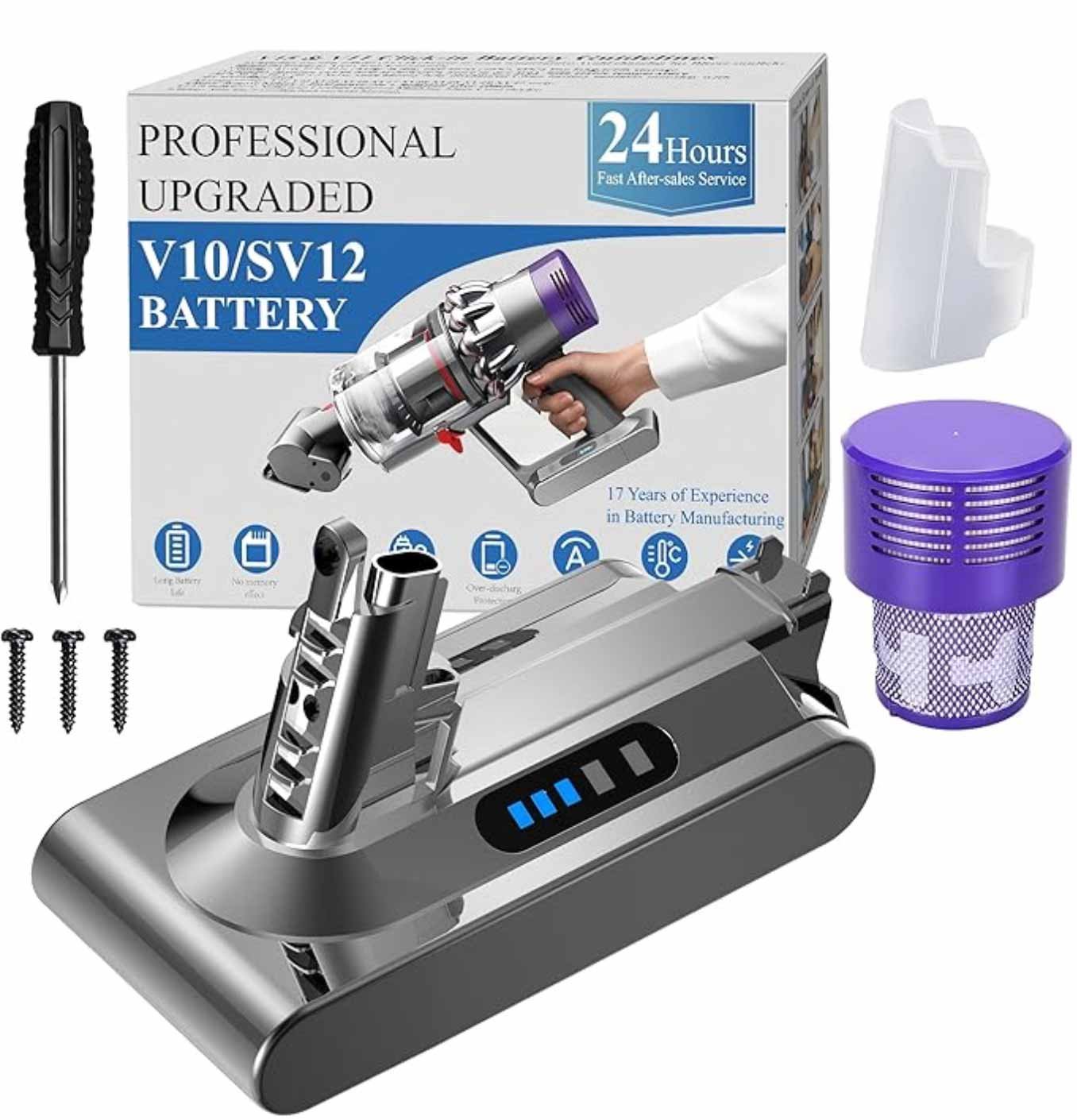
Lithium-ion cells degrade through a combination of charge cycles, heat stress, and plain calendar aging. The V10's 525-watt motor draws power aggressively, generating significant heat inside the plastic battery casing. Based on consumer feedback, most V10 batteries last somewhere between three to five years of regular household use before capacity drops noticeably or the pack fails outright. That’s plenty in my opinion.
You'll know when the battery’s days are over. The battery indicator flashes a solid red light. That flashing red light is the V10’s built-in fault indicator. In my experience maintaining my own gear and looking into how Dyson manages their power delivery, nine times out of ten, it points to one specific issue: the battery has completely failed. Once that fault is triggered, the vacuum effectively locks you out. It stops working entirely to prevent any electrical damage.
Lithium-ion cells, like the ones crammed into the base of the V10, rarely experience a sudden, catastrophic failure overnight. Instead, they suffer a slow, annoying degradation. You can think of it like a smartphone battery that has been through way too many charge cycles over three years. Your phone might say it has a 30% charge, but the second you open a heavy app, it shuts down. The V10 does the exact same thing after a few years.
Luckily, you can replace it, and there are even some cheaper options out there if you don’t want to spend extra on Dyson’s original batteries.
The Dyson Family Lineup: Where Does the V10 Actually Fit?
Dyson's product matrix is – and I say this as someone who writes about tech for a living – needlessly confusing. Multiple generations overlap in retail channels simultaneously. You can find a V8, V10, V12, V15, and V16 all sitting on the same Amazon page, and good luck figuring out which one makes sense for your situation without a spreadsheet.
So let me break it down for you.
V10 vs. Dyson V8
The V8 is Dyson's current entry-level option, typically sitting around $349–$439 at major US retailers. It uses the older perpendicular bin design, has a smaller dust capacity, and tops out at about 40 minutes of runtime. The V10 beats it on suction (150 AW vs. roughly 115 AW) and has the more hygienic point-and-shoot bin emptying. But the V8 is lighter and a bit easier to maneuver in tight spaces.
If you're choosing between these two at similar price points, the V10 is the better machine. The linear airflow design alone handles larger debris more reliably. But if the V8 is significantly cheaper, it's not a bad vacuum – just an older-architecture one.
V10 vs. Dyson V12 Detect Slim
This is the comparison that hurts the V10 the most, because the V12 is essentially what the V10 would be if it were designed today.
Same peak suction: 150 AW. Same max runtime: 60 minutes. On paper, they're matched. In practice, the V12 is a generational leap in usability. It's lighter at 5.2 lbs. It ditches the fatiguing trigger grip for a single-button power switch. It has the Fluffy Optic head with an angled green laser that makes invisible dust glow on hard floors – which, the first time you see it, genuinely changes how you think about how clean your floors actually are. And there's a rear LCD screen with a piezo sensor that categorizes particle sizes in real time.
The V12's dustbin is smaller (0.10 gal vs. the V10's 0.20 gal), which means more frequent emptying. But at around $600, the technology gap between it and the V10 is immediately obvious the moment you pick both up. If budget allows, this is the vacuum the V10 wishes it could be.
V10 vs. Dyson V15 Detect
The V15 consistently earns "Best Dyson Vacuum Overall" rankings across editorial roundups in 2026, and after looking at the specs, it's easy to see why. 240 AW of suction, automatic power adjustment based on floor type and dust density, anti-tangle heads as standard – it deep-cleans thick carpet with an authority the V10 physically can't match.
At 6.8 pounds it's heavier, and at $650–$849 (depending on the accessory bundle) it's a serious investment. But "investment" is the right word. The V15 is a machine you buy once and trust for years. The V10, by contrast, serves as the budget alternative for anyone who needs a Dyson but can't justify V15 pricing. There's no shame in that – but the performance gap is real and measurable.
V10 vs. Dyson V16 Piston Animal
And then there's the V16. The new flagship, rolling out across US retail in 2026, and it exists in a completely different universe from the V10.
315 Air Watts. A 70-minute runtime. A 1.3-liter dustbin (or 2.5L with the self-emptying dock). The Hyperdymium 900W motor. An All Floor Cones Sense head that dynamically adjusts brush bar speed without input. A mechanical dust-compressing lever in the bin. Sealed 99.99% HEPA filtration. At approx. $999–$1,050, it's aimed at large, multi-story homes and consumers who want the absolute best available.
Comparing the V10 to the V16 isn't really a fair fight – it's more of a time capsule exercise. Eight years of engineering separate these two machines, and it shows in every single metric. But that's also kind of the point. The V16 exists for people who want the pinnacle. The V10's value proposition was never about competing at the top – it's about whether "good enough" is actually good enough for your specific situation.
| Feature | V8 | V10 | V12 Detect Slim | V15 Detect | V16 Piston |
|---|---|---|---|---|---|
| Max Suction (AW) | ~115 | 150 | 150 | 240 | 315 |
| Runtime (max) | 40 min | 60 min | 60 min | 60 min | 70 min |
| Weight | ~5.5 lbs | 5.9 lbs | 5.2 lbs | 6.8 lbs | ~7.7 lbs |
| Laser/Optic Dust | No | No | Yes | Yes | Yes |
| Onboard Compression | No | No | No | No | Yes |
The Competition
Dyson's brand power is undeniable – the name alone drives over 110,000 monthly search queries in 2026. But brand recognition doesn't pay your electricity bill, and it doesn't pick up dog hair. In the US market, SharkNinja has been quietly (and not so quietly) eating into Dyson's value proposition, especially at the price points where the V10 lives.
Self-Emptying Changed Everything
If there's one feature that separates the 2026 vacuum market from the 2018 market, it's the auto-empty base station. And this is where the V10's age becomes impossible to ignore.
Anyone who's owned a bagless vacuum knows the ritual: you hold the bin over the trash, hit the release, and watch a small mushroom cloud of dust and allergens puff back into the air you just spent twenty minutes cleaning. It's deeply counterproductive. Search queries for "self-emptying vacuum" jumped 48% year-over-year heading into 2026, which tells you consumers have collectively decided they're done with that experience.
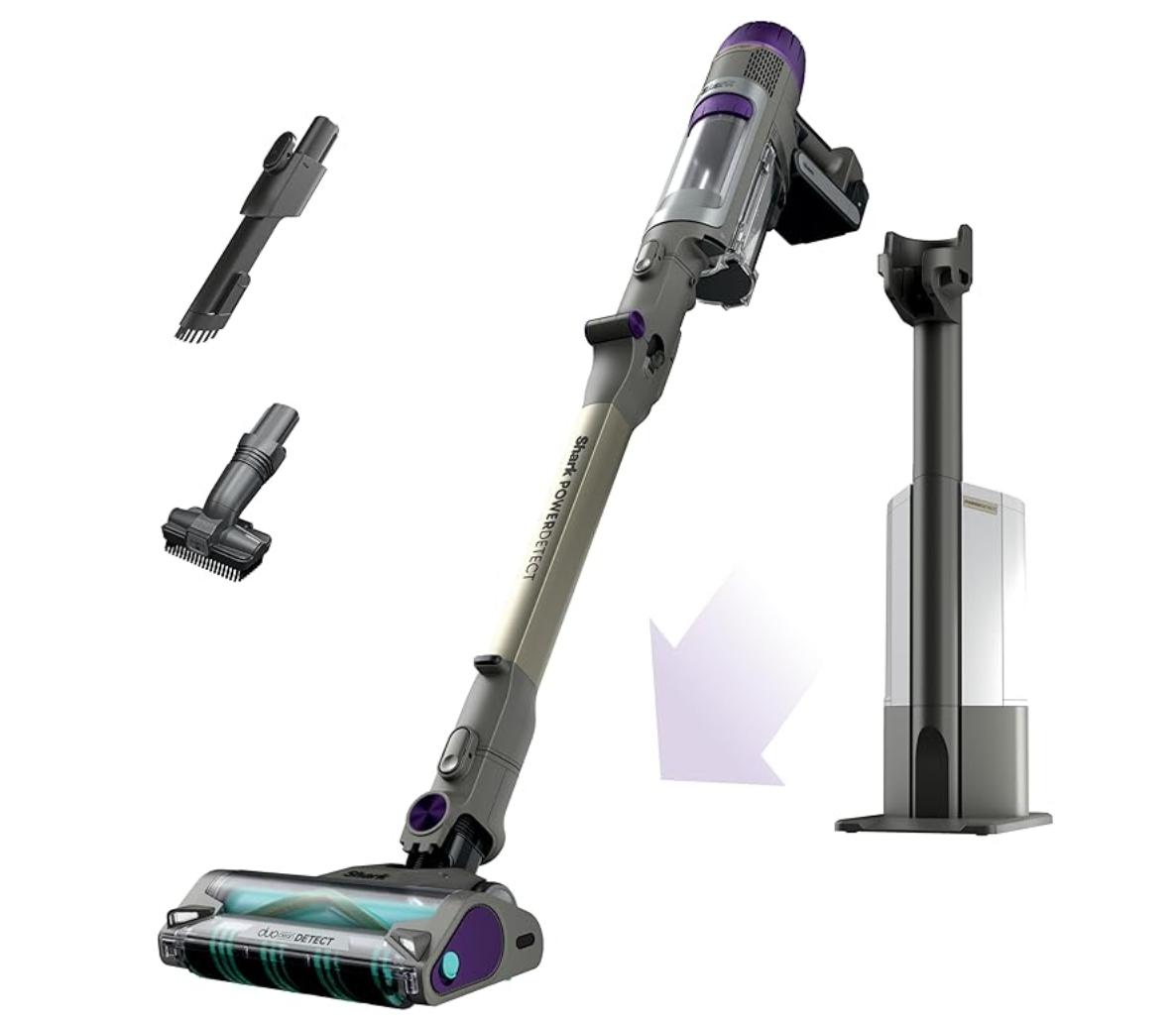
The Shark PowerDetect Clean & Empty nails this. You dock the vacuum, the base station automatically evacuates the dustbin into a sealed, odor-neutralizing reservoir. Done. No dust cloud. No bending over a trash can. And it retails for around $399–$439 – which is exactly the price bracket where a new or premium-refurbished V10 sits.
That's a problem for the V10. At the same money, one machine empties itself and the other requires you to manually eject dust into your face.
The Shark also uses a DuoClean dual-roller system – a soft microfiber roller and a bristled silicone roller in the same head. That means no swapping cleaner heads when you move from hardwood to carpet. With the V10, transitioning between floor types means stopping, bending down, and physically switching heads. It's not the end of the world, but once you've experienced a vacuum that just... handles it, going back feels unnecessarily manual.
The Little Things That Add Up
The PowerDetect also features Edge Detect and Direction Detect logic – it automatically boosts suction along baseboards and when you reverse direction.
The V10, by contrast, is entirely manual. You control everything. There's an argument to be made that simplicity is a feature – fewer electronics means fewer things to break – and the V10's cyclonic separation array genuinely holds up. It rarely loses suction, the build quality of the plastics is noticeably superior to most competitors at similar price points, and the engineering fundamentals are sound.
But for a consumer in 2026 who values automation, mess-free disposal, and seamless multi-surface cleaning? The Shark lineup is increasingly where they end up. The V10's strengths are real, but they're the strengths of a different era.
One fair counterpoint: vacuum enthusiasts note that Shark models generally lag behind Dyson in long-term repairability, easy disassembly, and modular parts availability. Though, as I covered earlier, Dyson's own supply chain issues in 2026 have somewhat undermined that advantage.
Buying Refurbished: Smart Move or Expensive Gamble?
Brand-new, factory-sealed V10 units are frequently listed as out of stock on Dyson.com in 2026. So for most buyers, the real question isn't "should I buy a V10 at full retail?" – it's "should I buy a refurbished V10?"
Dyson runs an official "Dyson Renewed" outlet, and authorized third-party sellers include Walmart Restored, eBay Refurbished, Woot, and Nordstrom Rack. A refurbished V10 Animal or Absolute typically lands between $199 and $349, which is a dramatic cut from the original retail price.
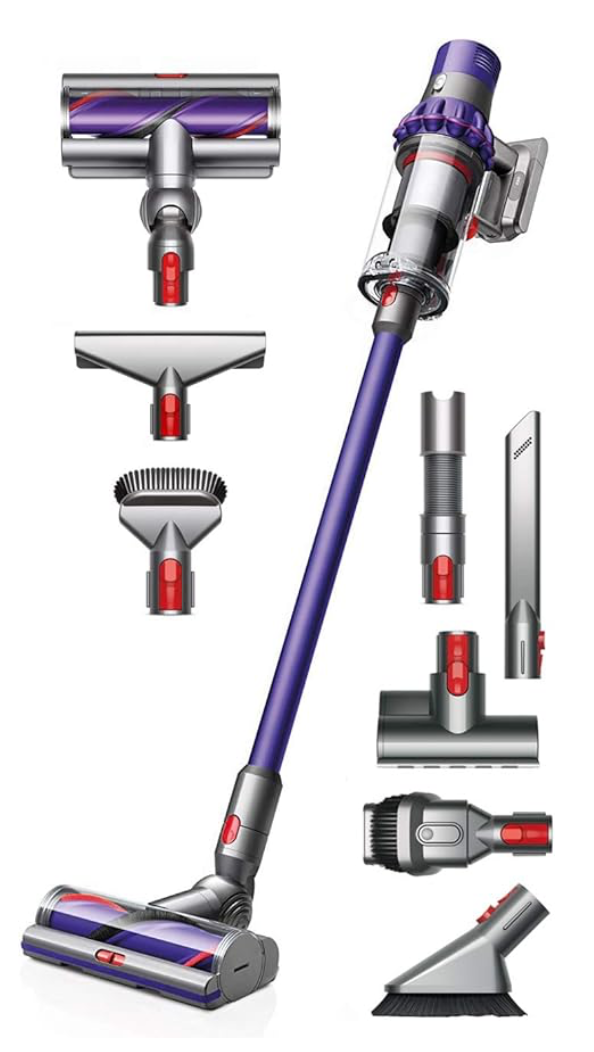
At sub-$250, the financial math shifts significantly. You're no longer comparing the V10 against modern flagships – you're comparing 150 AW of genuine Dyson cyclonic engineering against whatever $200 buys you from generic Amazon brands. And at that price, the V10 wins handily.
But – and this is important – you're accepting risk.
There Are Potential Risks
Cosmetic and Mechanical Wear
Refurbished units may arrive with micro-scratches, scuffs, or discoloration. More critically, the internal rubber gaskets sealing the cyclone assembly may be nearing the end of their useful life, increasing the likelihood of those "fake clog" airflow leaks I detailed earlier.
Battery Roulette
Refurbishment programs claim to test batteries to high standards, but lithium-ion health can't be fully restored without replacing the cells entirely. Reddit is full of reports from people who received refurbished V10s with batteries that failed or showed severely degraded runtime within weeks. You might get a unit with a healthy pack. You might not. There's no reliable way to know before purchase.
Warranty Limitations
A new Dyson cordless comes with a 2-year warranty. Refurbished units from Dyson's own outlet are designated "final sale" – no returns for buyer's remorse – and carry a reduced warranty, typically one year or less depending on the seller. If the motor or battery fails in month thirteen, you're paying out of pocket for repairs that can easily exceed what you paid for the refurbished unit itself.
My read on this, informed partly by my background studying financial psychology: the refurbished V10 is a calculated risk with asymmetric outcomes. If you get a good unit, you've scored an exceptional deal – premium cleaning performance at budget pricing. If you get a lemon, the repair economics quickly make it a worse deal than buying a new competitor outright. Know your risk tolerance before you buy.
For someone who's technically inclined, comfortable with maintenance, and maybe willing to do the power tool battery swap if the original pack dies – a $199 refurbished V10 is genuinely great value. For someone who wants a zero-hassle appliance that works reliably from day one, this route is a gamble I'd hesitate to recommend.
And if dropping half a grand on a new vacuum feels too steep right now, taking a step back to build a solid emergency fund is always the smartest first move before buying depreciating tech.
Final Verdict: Should You Buy a Dyson V10 in 2026?
After spending real time with this machine – testing it across my apartment's mix of hardwood, tiles and carpet, dealing with the maintenance, comparing it against what's available today – here's where I land.
The V10 is no longer a cutting-edge vacuum. That's not controversial; it's math. 150 AW is outclassed by the V15's 240 AW and the V16's 315 AW. It has no laser dust detection. No auto-adjusting suction. No LCD display. No self-emptying option. The maintenance demands – fake clogs, strict filter drying schedules, inevitable battery degradation – require a level of patience that most consumers in 2026 aren't willing to give.
At full retail price ($450–$539), don't buy it. At that number, a Shark PowerDetect Clean & Empty gives you dramatically more features, dual-roller convenience, and auto-emptying for the same money or less. The V10 simply can't compete at its own original price point anymore.
But the V10 Becomes Genuinely Compelling Under the Right Conditions:
Under $250 refurbished? At $199–$250, you're getting build quality, cyclonic engineering, and suction performance that nothing else in that price range matches. The risk is real – battery roulette, gasket wear, limited warranty – but for a buyer who understands those trade-offs, the value is legitimate in my opinion.
DIY-minded and mechanically comfortable? If you're the kind of person who doesn't mind switching battery packs, periodic deep-cleaning of cyclone assemblies, and treating your vacuum like a project rather than an appliance, the V10 chassis is an excellent foundation. Especially as a workshop, garage, or secondary vacuum.
Primarily hard floors? If your home is mostly hardwood, LVP, or tile, the V10 with the Soft Roller head is still really good. You sidestep the anti-tangle issue entirely, and 150 AW is more than sufficient for daily hard-floor cleaning. This is the use case where the V10's age matters least.
For everyone else – the average 2026 consumer who wants a primary vacuum that handles mixed floor types, pet hair, and automated disposal without fuss – the V10 is a legacy product. The Gen5 Detect,V15, V16, and Shark's automated lineup have all moved past it.
The V10 only enters the conversation as a budget option at heavily discounted or refurbished pricing. (For a slight bump in price and a built-in LCD screen, you should also consider its immediate successor – read my full breakdown of the Dyson V11 to see if it’s a better fit for your floor plan.)
That said, there's something worth acknowledging. The V10's cyclonic core – the motor, the 14-cyclone array, the fundamental airflow engineering – is as effective at moving dirt from a floor into a bin today as it was the day it launched. Dyson got the architecture right in 2018. The world just kept building on top of it.
Whether that foundation is enough depends entirely on your budget, your tolerance for hands-on maintenance, and what "good enough" means to you.
Over to You
That's the full picture on the Dyson V10 in 2026 – the good, the frustrating, and the "it depends." I tried to be as thorough and honest as possible here, because I think that's what actually helps when you're staring at a wall of vacuum listings trying to figure out where your money should go.
If you're currently using a V10, I'd genuinely love to hear how it's holding up for you. Have you hit the fake clog wall? Or is yours still humming along just fine? And if you're on the fence about buying one – refurbished or otherwise – drop your questions in the comments below. I read every single one, and there's a good chance someone else in the comments has been in exactly your situation.
Want more reviews like this? I write in-depth, no-fluff tech content regularly over at tobiasholm.com/tech. If you'd like these posts delivered straight to your inbox – along with the occasional finance deep-dive and behind-the-scenes content updates – subscribe to my tech newsletter. No spam, no affiliate-link blasts. Just honest, detailed writing from someone who actually uses the stuff he writes about.



FAQ
-
It depends almost entirely on price. At original retail ($450+), no – modern competitors like the Shark PowerDetect Clean & Empty offer significantly more features for the same money. But at $199–$250 refurbished, the V10 becomes a genuinely strong budget pick. The cyclonic engineering and build quality still outclass anything else in that price range. Just go in with realistic expectations about battery life and maintenance demands.
-
Most V10 batteries last three to five years of regular household use before experiencing significant capacity loss or outright failure. When the battery dies, you'll see a solid red indicator light that locks the machine out entirely. Replacement OEM batteries are expensive – often approaching a third of a new vacuum's cost – which is why the power tool battery adapter market has exploded.
-
The V10 has an internal pressure sensor that shuts the vacuum down when it detects restricted airflow. The problem is that this sensor is overly sensitive. Fine dust particles – drywall dust, pet dander, fine ash – can accumulate inside the cyclone assembly and trip the sensor even when there's no actual blockage. Fixing it often requires a full teardown of the cyclone unit, scrubbing internal gaskets, and sometimes using compressed air to clear impacted dust from non-washable components. It's the single most common complaint among long-term V10 owners.
-
Technically, yes. Aftermarket adapters that accept standard 18V or 20V power tool batteries are widely available and increasingly popular. They're an affordable way to revive a V10 with a dead battery. However, these adapters bypass Dyson's proprietary Battery Management System, which means you lose cell voltage monitoring, thermal protection, and low-voltage cutoff safeguards. There's a real risk of over-discharging the power tool battery, which can damage cells and create a fire hazard. The vacuum also becomes heavier, less balanced, and incompatible with the wall-mounted dock. It works – but understand what you're trading away.
-
The V15 is a substantial upgrade in nearly every measurable way. It produces 240 AW of suction versus the V10's 150 AW, features automatic suction adjustment based on floor type, includes anti-tangle cleaner heads, and has an LCD display with real-time particle counting. The V15 retails between $650 and $849, so the price gap is significant. If your budget allows it, the V15 is the better long-term investment. The V10 only makes sense as an alternative if the V15's pricing is out of reach.
-
The V10 registers at 87 dBA in Boost mode, which is noticeably loud by 2026 standards. For reference, the newer V12 Detect Slim operates at around 75 dBA, and even the more powerful Gen5 Detect caps at 85 dBA. If you work from home, live in a smaller apartment, or share walls with neighbors, the V10 on max power will absolutely make its presence known. On lower suction settings it's more manageable, but Boost mode is not a quiet experience.
-
A refurbished V10 in the $199–$250 range can be an excellent deal – if you understand the risks. Battery condition is the biggest unknown; some refurbished units arrive with healthy packs, others fail within weeks. Warranties on refurbished units are shorter (typically one year or less), and Dyson's own renewed outlet marks them as final sale. If you're comfortable with some uncertainty and potentially handy enough to swap the battery yourself down the line, it's a smart budget play. If you want guaranteed reliability out of the box, consider spending more on a new machine with a full warranty.
-
For most people, the Dyson V15 Detect hits the best balance of performance, features, and price. It consistently ranks as the top overall Dyson in editorial reviews. If budget is no object and you have a large home, the V16 Piston Animal is the new flagship with unmatched suction and runtime. For smaller spaces and lighter cleaning needs, the V12 Detect Slim offers modern features at a lower weight. The V10 only enters the conversation as a budget option at heavily discounted or refurbished pricing.