
Apple Vision Pro FOV: How Wide Is the Field of View?

Let me save you the scrolling: Apple has never published a field-of-view number for the Vision Pro. Not for the original, and not for the current M5 model. Work your way through Apple's technical specifications and you get pixel counts, refresh rates, sensor details, weight, battery life – and no horizontal, vertical, diagonal, monocular, or binocular FOV figure anywhere.
Which is annoying, because "Apple Vision Pro FOV" is exactly the kind of question that wants one clean number for an answer. What you'll actually find is a pile of estimates from different years, measured in different ways, plus a genuine disagreement between reviewers who have worn the current hardware. So let's sort it out.
What Apple Publishes, and What It Leaves Out
The spec sheet is not thin. Apple lists 23 million pixels across a micro-OLED display system, a 7.5-micron pixel pitch, supported refresh rates of 90Hz, 96Hz, 100Hz, and 120Hz, M5 and R1 chips, and a headset weight of 750 to 800 grams with the Light Seal and Dual Knit Band attached, plus a separate 353-gram battery.
What's missing is a single degree value.
I find it genuinely interesting, though, that Apple clearly treats field of view as a real, measurable variable internally. Its developer documentation for Visual Fidelity monitoring describes an API that watches headset fit and whether the wearer is actually receiving a required field of view, and lets an app react when either drifts out of range. Apple built tooling to detect when you're not getting the FOV the software expects. It just won't tell you what that FOV is in degrees. The documentation is also still labeled beta and gated behind an enterprise entitlement, so this isn't something a curious owner can poke at.
Why the Numbers You'll Find Don't Agree
Part of the confusion isn't Apple's fault. It's that "field of view" is several different measurements wearing the same name.
The OpenXR specification describes each rendered eye view with four angular boundaries – left, right, up, and down – and derives total horizontal and vertical FOV from those. That's the rendering frustum. It isn't automatically the same as everything a human head can usefully see through the optics. And a 2026 review of XR display standards lays out just how many choices sit behind any published figure: FOV can be measured from luminance or contrast boundaries, from a defined eye point, and with either a fixed pupil or simulated eye rotation. Change the endpoint, change the number.
As a pianist I've spent a lot of hours reading frequency-response charts for microphones and monitors, and the lesson transfers cleanly. Two honest measurements of the same object can disagree, because they're quietly answering slightly different questions.
Where 100° and 120° Came From
These two numbers get copied around constantly, usually without dates attached.
The 100° figure traces back to an iFixit teardown that used what it openly called a rough 100° measurement while estimating angular resolution. Independent display analyst Karl Guttag separately modeled roughly 97° by 74° at one fitted distance. Both are from early 2024 and describe the original M2 model.
The 120° figure has shakier roots still. It comes from a HyperVision optics analysis published before the headset shipped, in which 120° by 90° was an assumed input that the company itself described as wishful.
So please don't stack them into a range. Different hardware generation, different methods, different years, and not one of them is a current specification.
Why Vision Pro Can Feel Narrower Than Any Spec Sheet Suggests
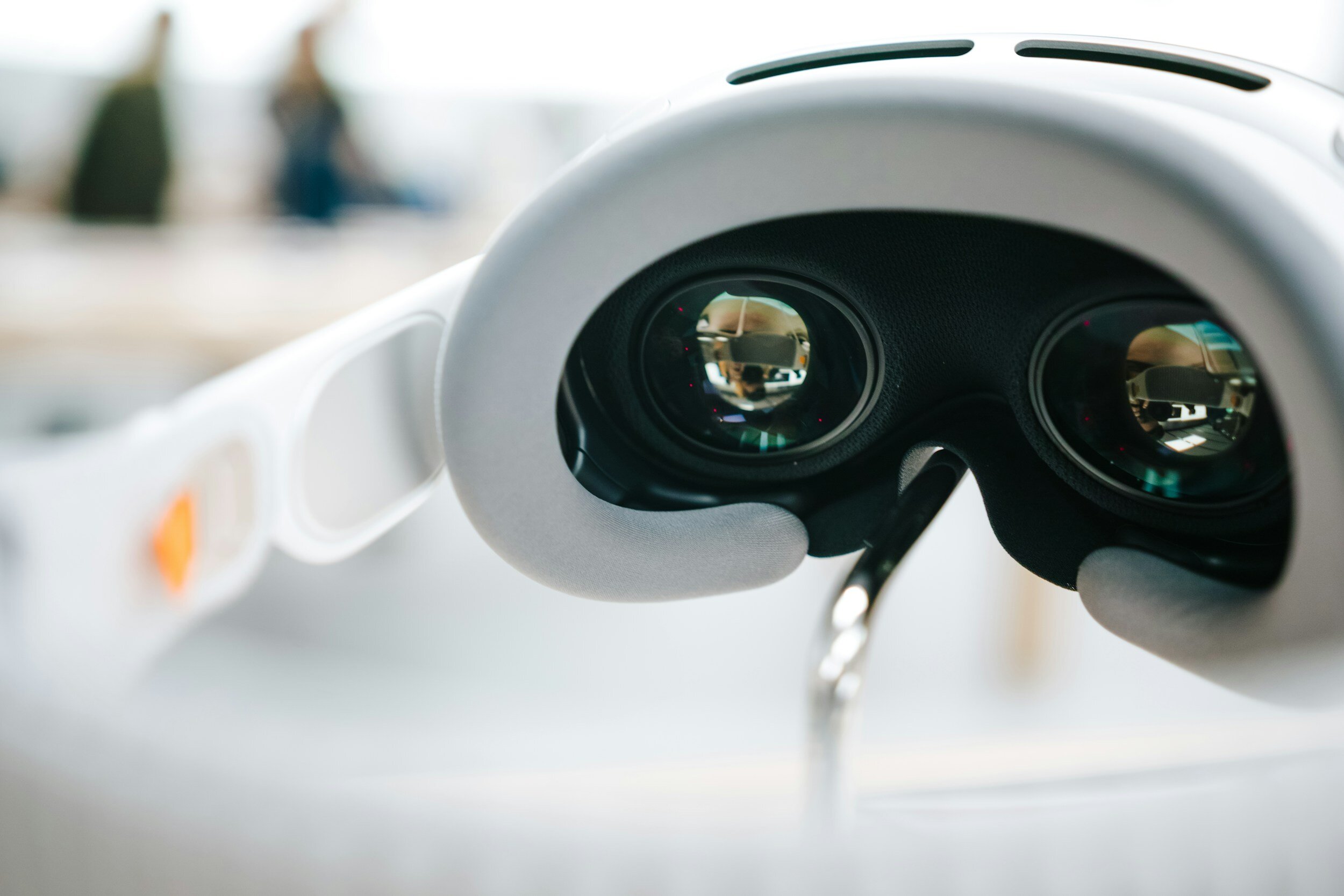
Eye relief is the distance between your eye and the lens, and it does a lot of quiet work here. A peer-reviewed study across multiple headsets with 21 participants found that increasing eye relief reduced measured FOV, and that facial anatomy, strap tension, interface foam, eye position, and IPD all shifted the effective result. It didn't test Vision Pro, and it's a few years old now, but the optical mechanism is general. Valve makes the same distinction in its own explainer on headset FOV, separating a theoretical maximum from the view an individual wearer actually gets.
The analogy I keep coming back to: it's a window. Press your face against it and you see the whole street. Step back half a meter and you see a slice of it. The window didn't change size.
Apple's own support material reflects this in practice. It requires the correct Light Seal and cushion and says never to wear the headset without both. And if the geometry is off, visionOS tells you: Apple documents "eyes too close" and "eyes too far" alerts, pointing wearers toward N+ or W+ cushions when their eyes sit too close and N or W cushions when they sit too far. The correct cushion isn't a comfort accessory. Apple says it keeps the displays a safe distance from your eyes.
Owner reports on how much that changes the view are all over the place. On a MacRumors thread about Light Seal sizing, one owner said switching between two sizes had "a profound effect on field of view, glare/flare, light leakage, and comfort," while a Reddit owner comparing seals concluded flatly that one "does not give me better FOV." Both are uncontrolled 2024 anecdotes, so I wouldn't lean on either. But that spread is sort of the finding.
Years on the front line of consumer tech support taught me how badly people want a single number to decide with. It rarely survives contact with an actual head.
Apple Vision Pro vs Meta Quest 3 vs Samsung Galaxy XR
This is probably the comparison most people actually want, so here's what's publicly on record:
| Headset | Official FOV | Display | Starting US price |
|---|---|---|---|
| Apple Vision Pro (M5) | Not published | 23 million pixels, micro-OLED, up to 120Hz | $3,699 (256GB) |
| Meta Quest 3 | 110° horizontal by 96° vertical | 2064 by 2208 LCD per eye, pancake lenses | $599.99 (512GB) |
| Samsung Galaxy XR | 109° horizontal by 100° vertical | 3552 by 3840 micro-OLED per eye | $1,799.99 (256GB) |
If $3,699 is doing most of the deciding for you, the Meta Quest 3 512GB is the much saner entry point – just remember that its published FOV still isn't a standardized comparison with Vision Pro.
The obvious temptation is to declare Quest 3 the winner on FOV. I'd resist it. Meta's figure and Samsung's figure are vendor specifications, and neither product page discloses the measurement protocol behind them. They aren't demonstrably comparable to each other, let alone to a number Apple never provided.
What we do have is subjective testimony, and it leans one direction. In UploadVR's review of the original model, the reviewer wrote that "horizontally it's fine, and feels roughly on par with Quest 2," but that "vertically it's one of the narrowest of any modern headset, noticeably narrower than any Quest." That's an M2-era impression rather than a measurement, so treat it as one experienced opinion.
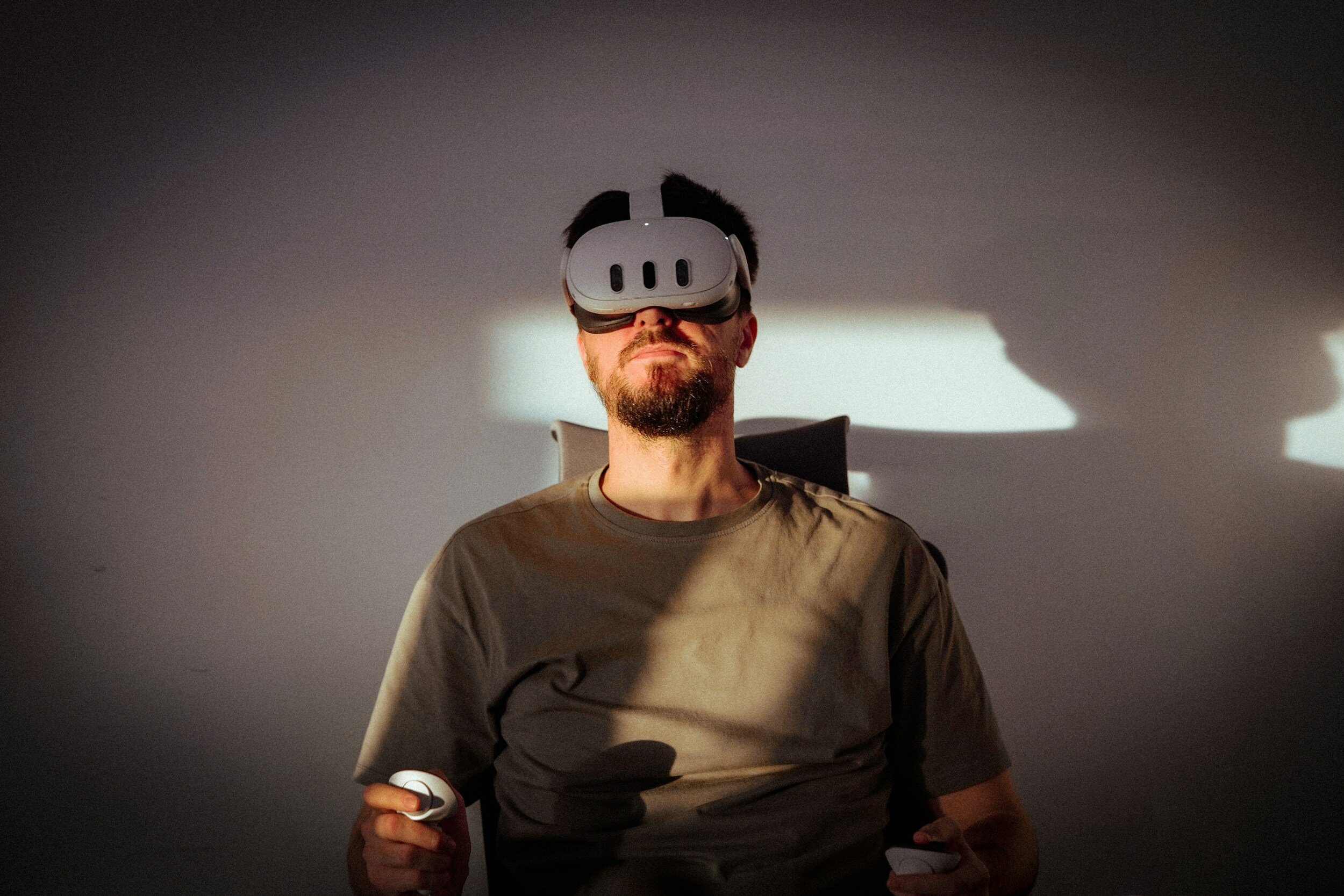
Worth noting that Meta plays the same fit game: Quest 3's facial-interface depth adjustment is something Meta says can improve both comfort and field of view. Same lever, different marketing. If the stock strap makes it difficult to keep the lenses in the same position, the Meta Quest Elite Strap with Battery adds a more stable dial fit and up to two extra hours of playtime. For a cheaper fit adjustment, the AMVR FC1 facial interface lets you vary the face-to-lens distance, but it changes fit – not the headset's underlying optical specification. If you already own one and want to show someone what you're seeing, I've written up how to cast a Quest 3 to a TV, and how to factory reset it if you're passing it on.
On price, Apple currently lists Vision Pro at $3,699 for 256GB, $3,899 for 512GB, and $4,199 for 1TB, and from €3,999 here in Germany. If you wear glasses, budget more: Apple says ordinary eyeglasses are incompatible with the headset, and ZEISS inserts currently start at $99. And since this is Apple gear, the usual caveat applies about where you buy it – I've covered why Apple products are often cheaper on Amazon, though Vision Pro configuration options make that a narrower case than it is for an iPad.
What the M5 Refresh Actually Changed
This is where the record gets messy, and I'd rather show you the mess than pick a side quietly.
Apple's own announcement says the M5 model renders 10 percent more pixels than its predecessor and supports up to 120Hz. It does not claim a wider optical field of view.
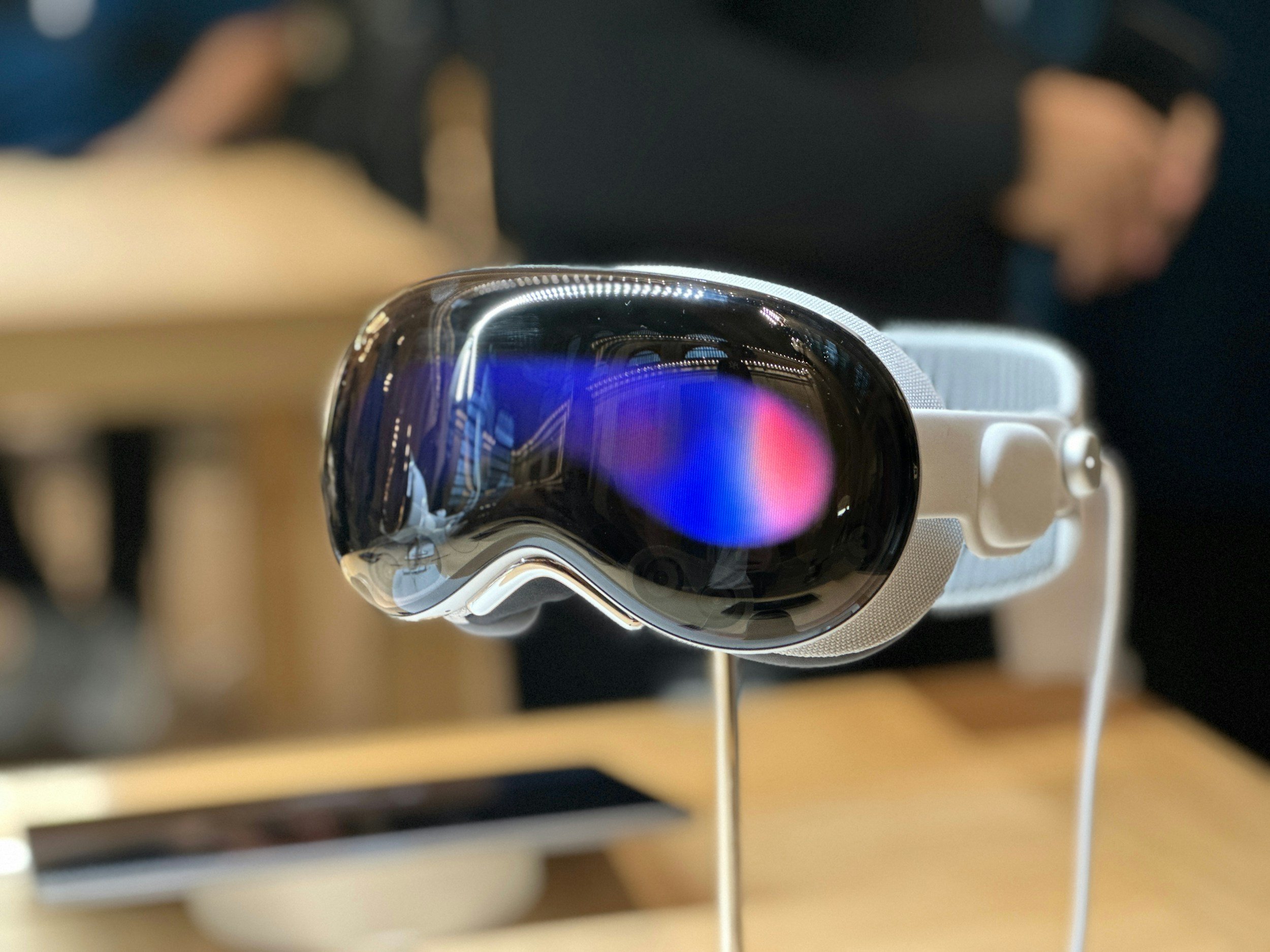
From my testing during the demo at the Apple Store, I gotta say that the field of view on the M5 version feels nearly identical to the M2 version; and overall, the AVP does seem narrower than the Meta Quest 3. Still, this is not necessarily a drawback in my view, since it also feels more immersive than the Meta Quest 3.
Other reviewers who've worn it don't agree with each other. Ars Technica reported "a marginally increased field of view (about 10 percent)," with no axis, baseline, or method given. CNET's reviewer, on the same generation of hardware, wrote that it "still has a narrower field of view compared with other VR headsets, giving more of a goggle-eyed view of things." And PCMag described the M5 enclosure as physically identical to its predecessor, using the same micro-OLED display.
My read – and I'll flag this as inference, not fact – is that Apple's 10 percent applies to rendered pixels, and in a short hands-on that's an easy thing to experience as "more view." Until someone publishes a repeatable measurement, "the M5 is 10 percent wider" is reported, not established.
For what it's worth, visionOS 27 shipped on September 14, 2026 with no numeric optical FOV change announced. Software updates don't widen lenses.
My Take
I'd rather Apple published a figure with a stated method than published nothing at all. Omitting the number doesn't make the criticism go away; it just means the internet fills the gap with a pre-release estimate somebody labeled wishful. That's a transparency problem, not an optics problem.
But I also think the number is the wrong thing to fixate on, and Apple's Visual Fidelity API is the tell. When a company builds monitoring specifically to detect that a wearer isn't receiving the expected field of view, fit stops being a footnote and becomes a first-order variable. Two people can wear the same headset and get measurably different views out of it.
So my advice is unglamorous: go do a demo, take the fit process seriously, and pay attention to the vertical dimension rather than just sweeping your eyes side to side. If you need optical inserts, factor them in from the start, since Apple notes that adding them later can mean a different Light Seal.
One genuine safety note, because Apple is direct about it: don't skip the Light Seal and cushion to chase a wider view. Apple also warns that immersive content can hide obstacles, advises against use near stairs, roads, moving vehicles, or uneven terrain, and recommends 20 to 30 minute breaks while you acclimate – stopping entirely for nausea, dizziness, headache, eye strain, or blurred vision.
The Bottom Line
There is no official Apple Vision Pro FOV. The 100-degree figure you'll see everywhere is a rough 2024 estimate of the older M2 model, the 120-degree figure was a pre-release assumption its own author called wishful, and reviewers of the current M5 model can't agree on whether anything widened at all.
What holds up: Apple publishes no number, fit measurably changes what you see, and Quest 3's published 110 by 96 degrees isn't a like-for-like comparison no matter how convenient it looks in a table. Judge this one on your own face, in a store, before spending $3,699.
If Apple or a lab ever publishes a repeatable measurement of the M5 optics, I'll revise this post the week it lands.
If you've worn one, I'd like to know which Light Seal and cushion you settled on, and whether the vertical edge nagged at you or quietly faded into the background after a week. Tell me in the comments below.
One email a week: what actually changed in consumer tech, what I'd skip, and a note whenever I rewrite an older post like this one because the evidence moved. You can subscribe here.
FAQ
-
Don't. Apple says never to wear the headset without the Light Seal and cushion attached, and it notes elsewhere that the correct cushion keeps the displays a safe distance from your eyes. A 2024 UploadVR reviewer did report a wider view with the seal off, so the temptation isn't imaginary. It's still not a tradeoff Apple supports, and eye safety seems like a poor place to improvise.
-
No. Apple uses "wide field-of-view" on its product pages to describe supported video playback formats, not the headset's optics. I found nothing indicating that any visionOS release changes the physical lens viewport. It's a media feature that happens to share a name with a hardware spec, which is exactly the kind of overlap that produces confused search results.
-
Not directly, going by what Apple documents. The knock-on effect is what matters: Apple says ordinary eyeglasses are incompatible, not every prescription is supported, and adding inserts later can require a different Light Seal. Since the seal and cushion set your eye-to-lens distance, swapping them is what actually moves your effective view. ZEISS inserts currently start at $99.
-
Samsung publishes 109 degrees horizontal by 100 degrees vertical for Galaxy XR, and Apple publishes nothing, so this comparison hits the same wall as the Quest 3 one. That vertical figure is the interesting part on paper, given how often the Vision Pro's vertical view gets criticized. But it's a vendor specification with no disclosed protocol, so treat the gap as suggestive rather than measured.
-
No. Refresh rate governs how often the display updates, not how much of your vision it covers. Apple's M5 announcement pairs 120Hz support with 10 percent more rendered pixels and says nothing about wider optics. If an M5 feels different to you, sharpness and fit are the likelier explanations.
-
Item description
-
Apple still sells it and shipped visionOS 27 in September 2026, so no. Bloomberg did report job cuts in August 2026 affecting Vision Pro-related teams, which is worth filing away, but Apple hasn't announced a successor or said anything about its optics. Anyone quoting you the next model's field of view is guessing.
MOST POPULAR


LATEST ARTICLES


Uncover the steps to successfully factory reset your Meta Quest 3 with this comprehensive guide. Learn how to backup your data, troubleshoot effectively, and return your device to its original state for an optimized VR experience.